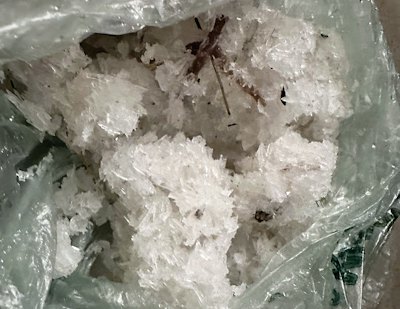
In recent years, calcium “crystals” have been forming in newly plastered swimming pools at a high rate during the winter. In addition, these calcium deposits are different in structure and form than the common calcium scaling problem that typically develops on pool surfaces due to out-of-balance pool water.
From various reports, this problem seems to occur more often in the northeast of this country where winter temperatures are very cold. When confronted with these unusual looking “crystals,” some industry pros are at a loss to explain or consistently prevent them from forming on new plaster surfaces.
Some assume that the root cause of this “crystal formation” must be aggressive water, but aggressive water does not cause calcium to precipitate out of the water and deposit onto pool surfaces.
That theory holds that the pool water is not being properly winterized by adjusting for the soon-to-be lower cold-water temperatures that can make the water more aggressive (see LSI). Then, that aggressive water dissolves calcium from the plaster, and then, somehow reverses that process and results in calcium crystals growing on the plaster surface.
The unique calcium crystals are generally not discovered until the spring when pool covers are removed. In such cases, after testing the water, the pH is found to be very high, often above 9.0. But aggressive water doesn’t do that. Interestingly, the crystals are not found in all areas of the pool.
That raises a question: Why don’t all plaster pools (new and old) with aggressive water develop calcium crystals?
Let’s explore reasons for this crystal growth phenomenon.
ISSUES
What could be causing the growth of these annoying deposits? There are a couple possible explanations, starting with plaster application practices.
Two forms of soluble calcium can slowly and naturally release out of new plaster into the water without the water being aggressive. This can take place for months after the new pool has been filled with water and balanced. Those soluble plaster components are calcium hydroxide and calcium chloride. When those two compounds naturally “bleed” into the water, the pH of the pool water may rise significantly (sometimes to 9.0). That condition can result in calcium carbonate precipitating out and depositing onto plaster surfaces.
It is worthy to note that the American Concrete Institute and Portland Cement Association have documented that cement quality plays a huge role in the amount of efflorescence and/or dusting (among other problems and defects) that develops on new concrete and cement surfaces. They cite the possibility of misapplication of plaster, instances such as adding a high-water content while mixing, using a high calcium chloride content, and poor troweling techniques (using excessive water while troweling) as reasons leading to a weak, porous, and excessive micro- cracking cement finish. Those are the issues that enable and result in calcium efflorescence (from calcium hydroxide and calcium chloride) to form on cement surfaces. The same problems exist with pool plaster.
Some plasterers add a high amount of calcium chloride (hardening accelerator) to plaster mixes during colder temperatures to speed up the plastering application so that it doesn’t take all day. As mentioned above, doing so leads to calcium hydroxide and calcium chloride dissolving out
of plaster over the winter regardless of the water balance. And that will raise the pH significantly, which also means the LSI increases beyond the norm (above +0.8). That is a recipe for calcium crystals to develop. It is also likely that stagnant water and lack of brushing during the winter can contribute to the calcium crystals forming and adhering to the plaster.

CHEMICAL START-UP EFFECTS
Differences in startup chemistry programs can also have a significant impact on new plaster surfaces. For 30 years, onBalance’s Bicarb startup (Positive LSI startup) has been shown to help prevent “plaster dust” from forming in new plaster pools. Would that startup program help negate crystal formation over the winter? Perhaps.
At onBalance, we believe Traditional startup procedures do not prevent plaster dust in newly plastered pools. In fact, they enable plaster dust to form. A lot of plaster dust means that the plaster surface has lost material and becomes more porous. Does the Traditional startup program contribute to the crystal formation problem? Perhaps.
When plaster problems develop, both the water chemistry and plaster need to be considered and investigated to determine the real cause of the problem. We owe that to our customers.