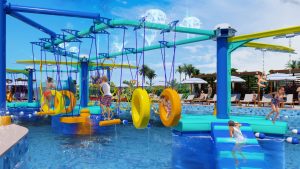

Arlington, Virginia has taken proactive steps to ensure the safety of its citizens by closing temporarily all splash pads and public pools. The decision was made after a sample of water taken from the California Lane Park Splash Pad detected a rare amoeba.
This potential finding has not caused anyone to become ill, or require hospitalization. Arlington’s drinking-water supply is not affected, and its water quality meets the strict safety guidelines established by federal and state authorities.
James Orloski, Director of Parks and Recreation at the City, emphasized that safety and transparency are important to the city. He said that the community would be informed of the results. He expressed his confidence in the advanced technology of the city and its industry-leading protocols that play a crucial role in monitoring and treatment the water in aquatics facilities.
This amoeba, Naegleria fowleri thrives in warm freshwater environments such as rivers, lakes and hot springs as well as soil. This amoeba can be found in poorly maintained swimming pools and water parks. Tap water, industrial water and water heaters are also breeding grounds. It is notable that it cannot survive in ocean waters.
Naegleria Fowleri is transmitted through the nose. This occurs when people are swimming or submerging their heads in water.
Arlington was one of a few cities that collaborated with the Environmental Protection Agency on a splash pad study. Water samples from the California Lane Park Splash Pad were sent to an EPA lab for analysis over the months of July and August as part the study.
The EPA notified Arlington on August 29th that a sample taken on August 17th at the splash pad showed “presumed-positive” indicators of Naegleria Fowleri amoeba based on preliminary lab observations. EPA is currently conducting additional tests to confirm these preliminary findings.
It’s important to note that Hurricane Idalia may have caused delays in the process of confirmation at the Gainesville lab.
The Naegleria Fowleri Amoeba is a rare but potentially deadly threat to humans. In 2021, a 3-year old named Bakari William died from a deadly amoeba after visiting Arlington’s Don Misenhimer Splash Pad.
Stephen Stewart, the Williams family’s attorney, was disappointed when he received Arlington’s release. He stressed the importance of Arlington’s compliance to safety standards and protocols, especially the Bakari Williams Protocol that was established in 2022. This protocol included additional measures to improve facility maintenance, as well as upgraded chemical testing and controllers and sanitation systems.
Arlington, after receiving the EPA notification, reviewed its inspection records to confirm that the water chlorination at the California Lane Park Splash Pad consistently fell within the acceptable ranges during the summer. Water chemistry controllers monitored the water and maintained average chlorination of 3.5 parts/million during operating hours, which is more than triple CDC recommended levels.
The City also conducted manual water tests four times per day, on average, every three to four hours, while the splashpad was being used.
According to CDC data, the risk of Naegleria Fowleri infection is extremely low. Only 29 cases were reported in the United States from 2013 to 2022.
Arlington implemented the Bakari-Williams Protocol in 2022. This protocol resulted in improvements to splash pads and pools worth over $650,000. These improvements included mechanical upgrades for chemical testing, controllers and secondary sanitation systems. They exceeded minimum federal, industry and state standards. Highlights included:
- Water chemistry controllers with sensors that are equipped with advanced technology to ensure the safety of water. They will shut off splash pads automatically if they read outside range.
- The state only requires that manual tests be conducted once daily.
- All splash pads must have a chlorine level between 2.5 ppm to 5 ppm, which is higher than the state’s minimum of 1 ppm.
- We have additional Certified Pool Operators in our staff.
- QR codes placed on signs at facilities allow visitors to view real-time data about water quality via their smartphones.
- Other improvements include reorganization of the lab, digital testing, secondary sanitation through UV systems and sharing real-time data via an app.
The post Arlington Closes Public Pools after Brain-Eating Amoeba Fear first appeared on PoolMagazine.com. Get the Latest Pool News.