Robert George Hauk’s influential career in the aquatic industry began through early displays of resourcefulness, creativity, and a strong entrepreneurial drive. Born in 1939, Robert demonstrated an early interest in construction and water-based projects, embarking on his first significant endeavor at the age of 13 in 1952. This initial project involved building a swimming pool in his family’s backyard—not for profit but as a personal undertaking motivated by a keen interest in aquatic engineering. Despite his father’s skepticism regarding the utility and economic viability of swimming pools, Robert persisted with determination. Partnering with his lifelong friend, Joe Lynch, Robert embarked on a collaborative journey that would span decades and set the tone for his future professional undertakings.
Limited by resources but undeterred by challenges, Robert and Joe manually excavated the pool using shovels. Demonstrating innovative thinking, they repurposed rejected grain silos purchased from Clayton and Lambert—a company soon to patent the steel wall swimming pool in 1954. Robert capitalized on Clayton and Lambert’s rejected inventory for his initial installations, ingeniously adapting these grain silos into pool basins whose depths were available in increments of 30 inches, typically resulting in depths ranging from 8 to 12 feet. This detail was recently confirmed by Clayton and Lambert, who noted their grain silos were originally sold in standard 30-inch heights. This early adaptive use of materials highlighted Robert’s pioneering approach to pool construction, setting a precedent for creativity, innovation, and adaptive resourcefulness that would characterize his entire career.
The Establishment of Circle Pools
Robert rapidly expanded his expertise, and by 1953, at age 14, he completed a significant early project for the Schroeder family in Kirkwood, Missouri. This pool installation was especially notable not only for its superior craftsmanship but also for its indirect historical significance in motorsports. Dorsey Schroeder, who grew up swimming in the family’s Circle Pool, would later rise to fame as the 1989 Trans Am Series champion in his rookie season with Roush Racing. Schroeder further competed professionally in NASCAR events and the Rolex 24 Hours of Daytona (Motorsport Magazine, n.d.), highlighting how Robert’s pools indirectly contributed to shaping a future motorsports champion.
Robert initially priced his pools at $1,995, an inclusive figure covering labor, materials, a ladder, a basic filtration system, and a pioneering Jacuzzi pump designed for effective water circulation and maintenance. This affordable price point significantly facilitated the rapid adoption of private swimming pools throughout the Midwest, making pool ownership accessible to broader socioeconomic groups and thus democratizing the recreational aquatic experience.
As Robert said, “$1,995 was a lot of money for a 14 year old kid, back then.”

Industry Impact and Innovation
Robert Hauk’s pioneering vision extended well beyond traditional recreational uses of swimming pools. Recognizing pools’ broader potential, he foresaw their applications in athletic training, scientific research, and even aerospace exploration. This visionary perspective established Circle Pools as a leader in innovative pool construction and technological advancement.
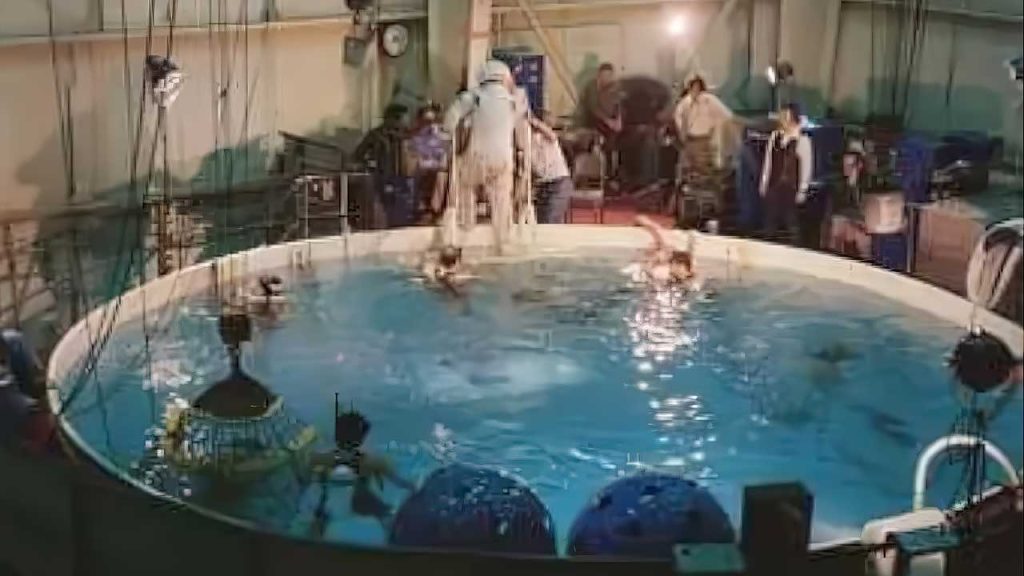
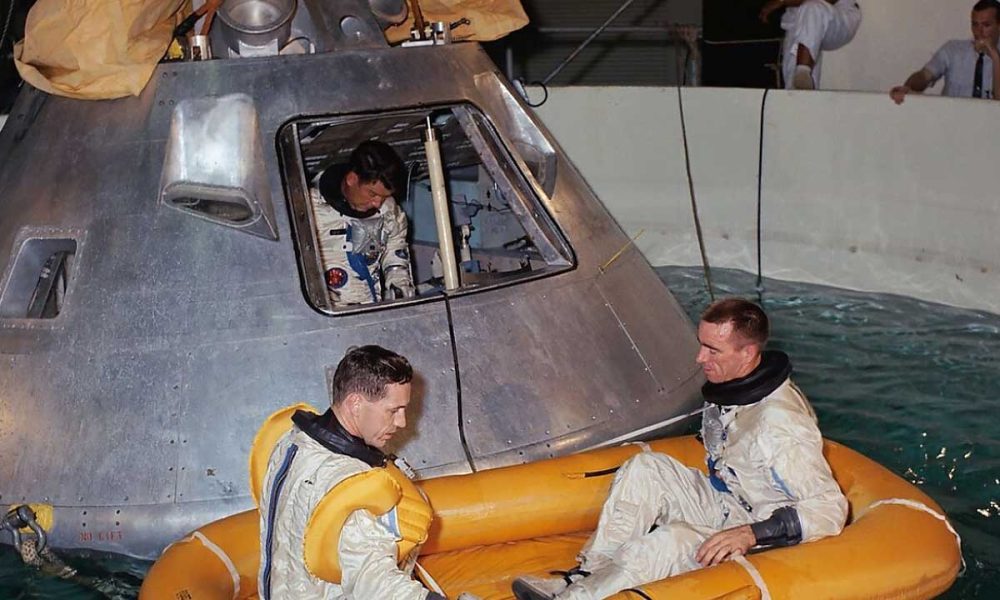
One of Robert’s most extraordinary and initially understated contributions came from a project commissioned by NASA and McDonnell Douglas Aircraft. Without extensive guidance or knowledge of the project’s ultimate purpose, Robert constructed an indoor grain silo pool within an empty warehouse.

It was only years later that he learned the significant impact of this installation—it served as a neutral buoyancy simulator used to mimic weightless conditions encountered by astronauts during NASA’s Mercury and Gemini missions. Robert’s pioneering work in buoyancy simulation became foundational, influencing current astronaut training practices employed in NASA’s Neutral Buoyancy Laboratory (NASA, n.d.).

Robert frequently emphasized the importance of perception and customer experience in pool design and sales, often repeating his favorite quote: “Sell the sizzle, not the steak. If you can do that, you will sell a lot of pools.” This philosophy guided his approach to business, focusing on the emotional appeal, lifestyle enhancement, and experiential value pools provided rather than merely the technical specifications.
The Continuing Family Legacy
Robert George Hauk’s legacy transcends his individual contributions, deeply embedding itself into the subsequent generations of his family. His passion for innovation, commitment to meticulous craftsmanship, and relentless pursuit of excellence laid a robust foundation upheld by 15 Hauk family members actively engaged in the contemporary swimming pool industry. The Hauk Family has now been in the pool business for 73 years. Evolving from the foundational grain silo-based designs to sophisticated, contemporary acrylic installations, the Hauk family continues to embody Robert’s original ethos—consistently prioritizing innovation, quality, and craftsmanship in their work. Robert’s son, Robby, built one of the largest pool companies in the United States, Hauk Custom Pools. Robert’s other sons, Tom, David, and Jeff, own Mirage Custom Pools which operates in Dallas, Texas focusing on luxury pool construction.

As Robert’s eldest grandchild, my professional endeavors through Pure Design and Elemental Acrylic are deeply informed by his foundational principles. My commitment to innovation, creative problem-solving, and high standards of excellence serve as a direct continuation of my grandfather’s pioneering legacy, actively influencing my career in modern aquatic design and development.
Honoring Robert George Hauk
Robert George Hauk passed away peacefully on Valentine’s Day, reuniting in spirit with his beloved wife. Though physically absent, his profound influence remains visible in the pools he designed, the family members inspired by his life’s work, and the countless lives positively impacted by his innovations. His enduring legacy is a testament to the lasting influence of visionary leadership, creative resilience, and innovative problem-solving within the aquatic industry. Robert’s story continues to inspire, exemplifying the lasting significance one individual can impart upon generations, with his innovations continually shaping the aquatic industry, one pool at a time.
References
- Motorsport Magazine. (n.d.). Dorsey Schroeder Career Profile.
https://database.motorsportmagazine.com/database/drivers/dorsey-schroeder - NASA. (n.d.). Neutral Buoyancy Laboratory.
https://www.nasa.gov/centers/johnson/neutral-buoyancy-lab - Clayton & Lambert. (n.d.).
https://claytonlambert.com/about/clayton-lambert-history/
The post A Legacy Built in Water: Robert George Hauk appeared first on PoolMagazine.com – Get The Latest Pool News.